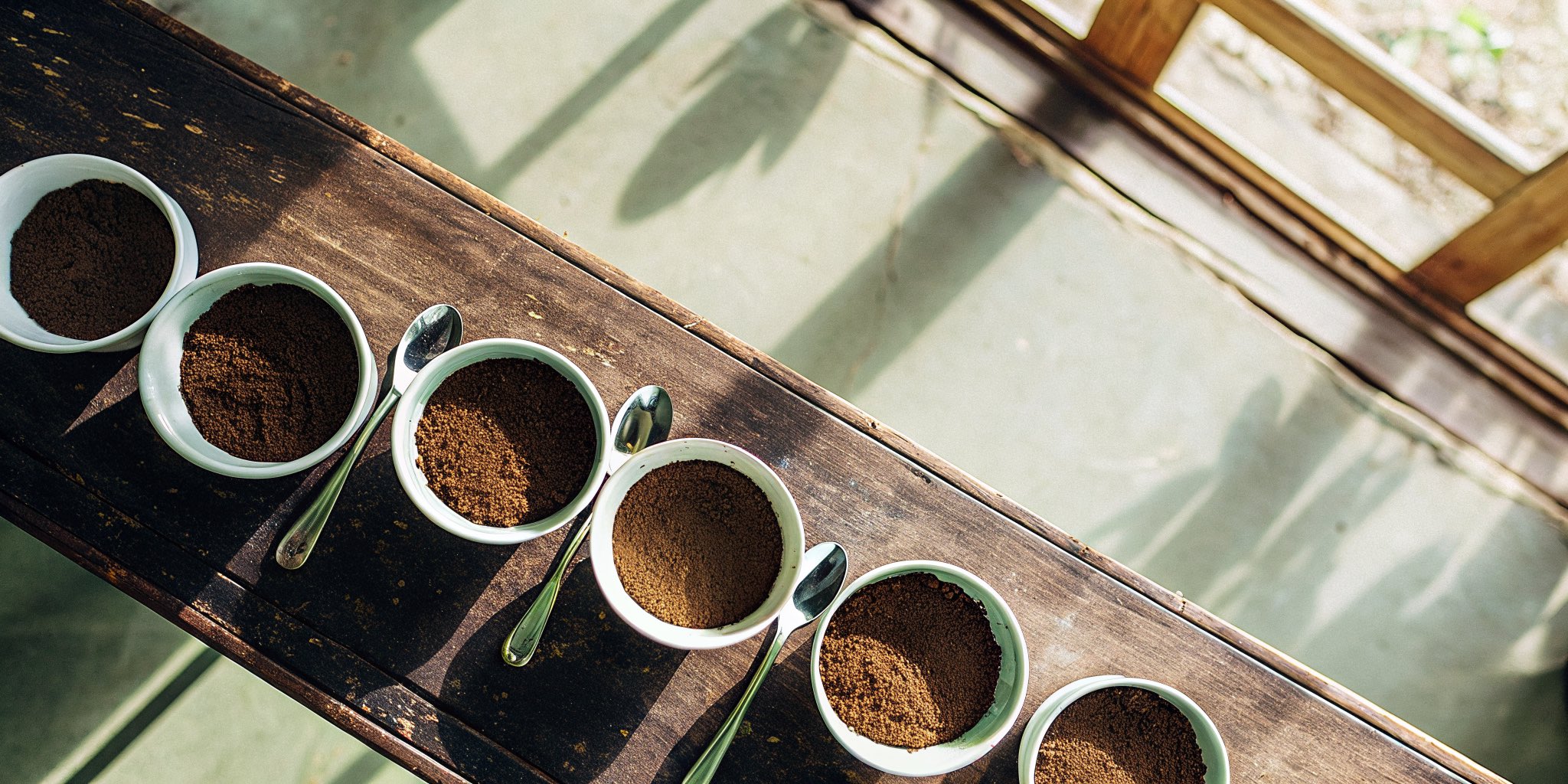
The cupping table Calibrated scoring, shared between the people who need to agree on it.
A score only means something if two people in different countries arrive at it the same way. The cupping workspace exists to make that possible: one protocol, one form, one record that both the producer and the buyer can open.
How a session runs.
The workspace follows the sequence a table already uses. Nothing here asks you to cup differently — only to write it down once.
-
Step 1 of 5
Log the sample
Origin, producer, process, and roast date go in before anyone tastes. Blind where it needs to be blind.
-
Step 2 of 5
Seat the table
Invite your team. Everyone scores on their own form, and nobody sees another sheet until the session closes.
-
Step 3 of 5
Score the cups
Fragrance, flavour, aftertaste, acidity, body, balance, uniformity, clean cup, sweetness, and overall — plus taint and fault cups.
-
Step 4 of 5
Calibrate
Compare sheets side by side, see where the table diverged, and settle on the number you will all stand behind.
-
Step 5 of 5
Keep the record
The session stays attached to the lot. Next season you can open it and see exactly what you thought, and why.
- Puntuación final
- Defectos
- Tazas con taint
- Tazas con fault
- Muestras
- Sesiones
- Equipo
Who it is for.
-
Producers
Show a buyer the score, not just the claim. A documented session travels further than an adjective.
-
Green buyers
Evaluate offer samples against pre-shipment against arrival, on one form, with one history.
-
Roasters & QC
Keep production honest with a table that calibrates, and a record that survives staff turnover.
Start a table.
Create a team, log your first samples, and run a session. The workspace opens on a trial.